

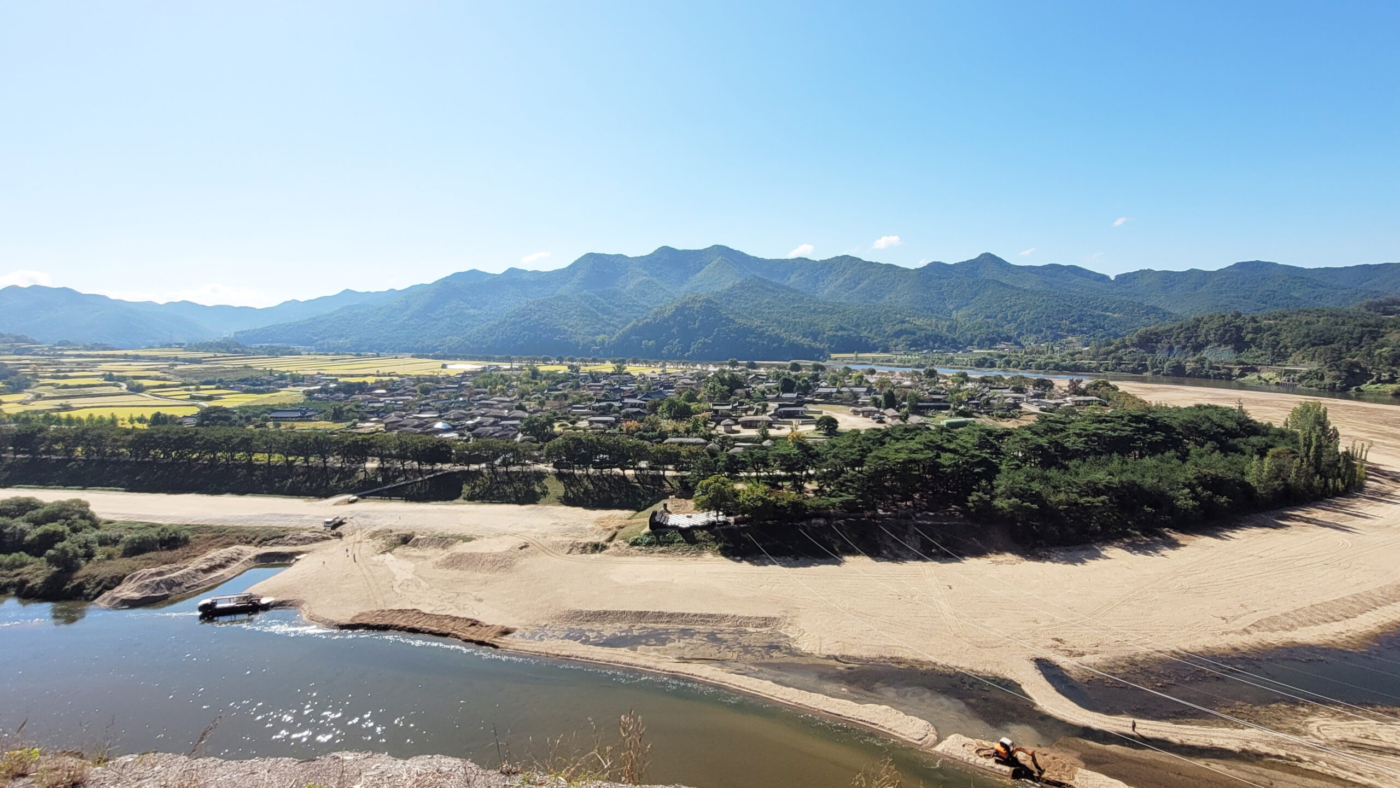
Beyond Seoul,
the shape of
a quieter Korea.
Follow the curve of a tiled roof, the line of a fortress wall and the meeting of village and hillside. Korea’s cultural landscapes reward a closer look.
A tiled roof lifts slightly at its edge. Beneath it, timber catches the light; beyond a wall, a hillside completes the view. Small details like these can become the most persistent memories of Korea. They give the eye somewhere to rest, and the imagination somewhere to begin.
Seoul offers an exhilarating opening to the country. A journey beyond the capital adds another scale: the length of a village lane, the shape of a courtyard, the distance between a house and the land around it. In Jeonju, Gongju and Andong, architecture becomes a way of reading place. Further east, temples and mountain scenery carry that conversation onwards.
01 / KOREA, IN DETAILJeonju, at the level of a doorway
Jeonju Hanok Village gathers around 700 traditional Korean houses into an urban neighbourhood. The rooftops make the first impression: dark tiles repeating, overlapping and turning at slightly different angles. At street level, the interest becomes more intimate. A wooden frame, the edge of an entrance and the space beneath an eave bring the buildings within the measure of a person.
It is a lively visitor destination, with the movement and conversation that popularity brings. Give a little attention to the buildings themselves. Look at how a roof overhang creates shade, how the eye follows the line of a wall, how a narrow opening changes the depth of a view. Details accumulate gently. By the time the journey continues, a whole neighbourhood may be remembered through one doorway.
That is part of Jeonju’s appeal: a familiar architectural vocabulary becomes richer with each small variation.
02 / KOREA, IN DETAILGongju, where the map reaches further back
Gongju introduces an earlier chapter. The city was once Ungjin, a capital of the Baekje kingdom. Its Gongsanseong Fortress and royal tombs belong to the UNESCO-listed Baekje Historic Areas, a group of sites that records an important period of exchange between Korea, China and Japan.
History here has a physical shape. Fortress walls follow the ground; a pavilion gives colour and human proportion to the stone around it. The Tomb of King Muryeong adds another point of reference to a kingdom whose influence travelled across the region. On the Golden Route, these encounters come before Jeonju, broadening the story before the journey turns towards the southern coast.
A little historical context changes the view. What first appears as a handsome wall becomes part of a larger geography of capitals, craftsmanship and ideas in motion.
03 / KOREA, IN DETAILA village shaped by its setting
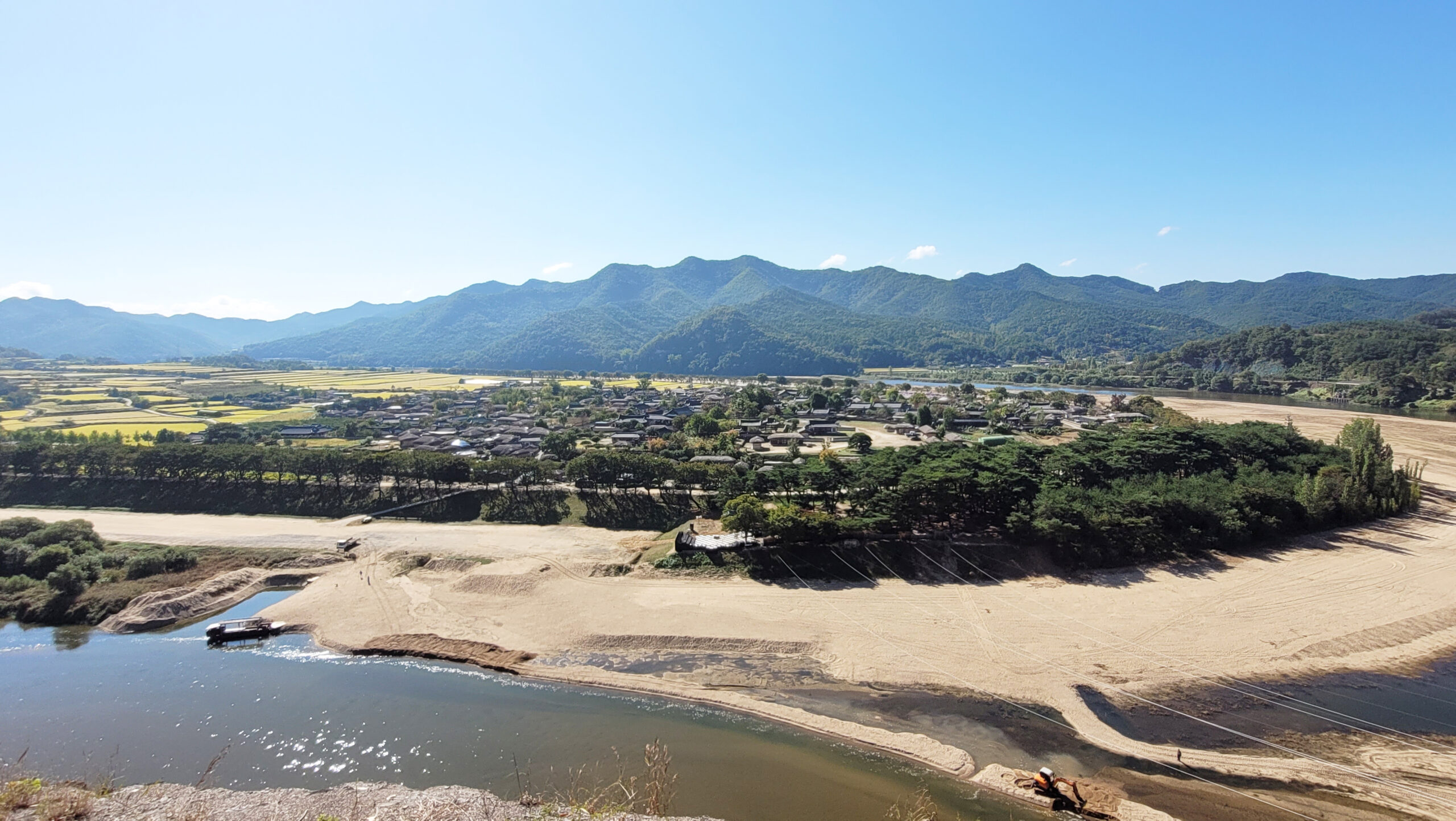
At Andong Hahoe Village, let your attention widen beyond the individual houses. The relationship with the surrounding river, fields and wooded slopes is central to the place. UNESCO recognises Hahoe, together with Yangdong, for a village tradition shaped by the social and cultural life of the Joseon period.
Tiled houses and lower thatched roofs belong to the same landscape, while their differences carry traces of the society that built them. A village plan can hold ideas about family, status and learning as clearly as a written record. UNESCO also notes how these settings inspired poets centuries ago: mountains, trees and water were already part of the experience of the buildings.
Hahoe remains a lived-in community. Keep to permitted visitor areas, respect private thresholds and make photographs with consideration for residents. The houses deserve that care. So does the everyday life that gives the village its continuity.
A village plan can hold ideas about family, status and learning as clearly as a written record.
04 / KOREA, IN DETAILBetween the coast and the mountains
A regional journey also allows the setting to change. Busan brings open water and the energy of a port city; Gyeongju brings the temple architecture of Bulguksa and the historical perspective of its national museum. These shifts give the quieter cultural visits their context. The eye returns to a carved detail or a tiled roof having seen the wider country around it.
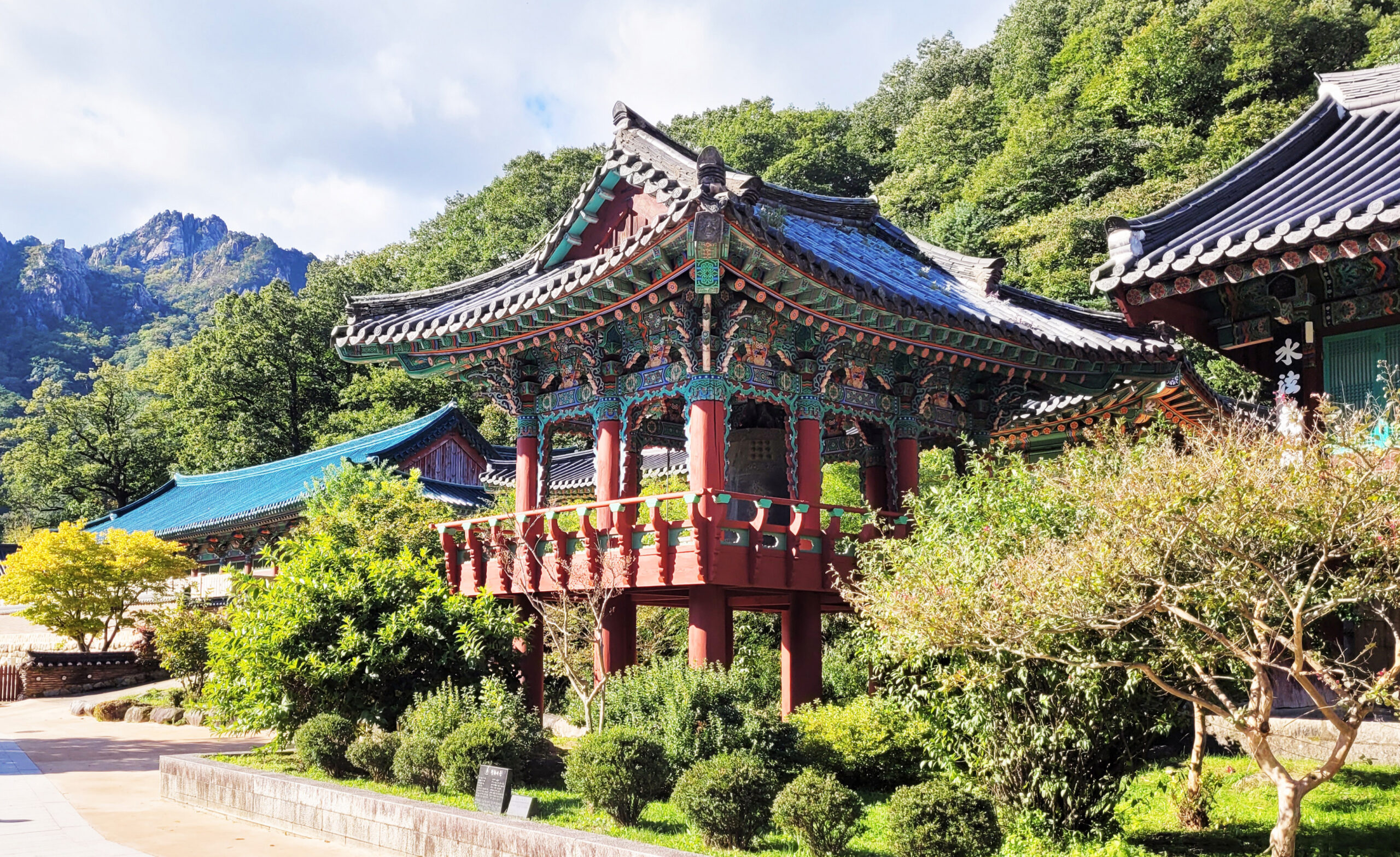
The Golden Route continues towards Seoraksan and Sinheungsa Temple after Pyeongchang. Painted timber, forest and the mountain backdrop bring several of the journey’s visual themes together. Other itineraries return through Pyeongchang with a different final day, so choose the route for the places that matter most to you.
Mountain visits require flexibility. Weather, traffic and local conditions affect the programme; October restrictions at Seoraksan can mean approximately 3.6 kilometres of walking to the park entrance, and traffic may prevent the visit. Seasonal colour is always nature’s decision.
05 / KOREA, IN DETAILBring curiosity, and leave room to notice
These journeys cover substantial ground, with full touring days and a shared schedule. Comfortable walking shoes and a willingness to move between regions will serve you well. So will a modest ambition for each stop: to understand one detail a little better, or to give one view your full attention.
You might remember the angle of an eave in Jeonju, the weight of Gongju’s stone walls or the way Hahoe sits within its landscape. Together, such impressions give a journey its personal texture. Long after the itinerary has been folded away, they can still bring a place clearly to mind.
Follow the places that draw you in.
Three English-guided journeys offer different ways into these landscapes. Explore the full itineraries, then tell Gala Holidays which route and travel dates feel right for you.
Beyond Seoul: Korea’s Cultural Heartlands
A regional circuit from Seoul through Jeonju, Hadong, Busan, Gyeongju, Andong and Pyeongchang, for travellers ready to continue beyond the capital.
The Korea Grand Journey
Begin with Seoul’s palace and city sights, then join the cultural circuit. Scheduled Incheon airport transfers bring the arrival and departure arrangements together.
Korea’s Golden Route
Add Gongju’s royal heritage, the southwest and Yeosu to a wider circuit, with a planned Seoraksan visit before returning to Seoul.
Tours operate on a shared basis with English-Korean bilingual guiding. Read each itinerary for its inclusions, departure calendar and practical conditions.
Further reading
Photography & permissions
- Andong Hahoe Folk Village · Bernard Gagnon — CC0 1.0. Cropped for display. The photograph retains its original licence.
- Sinheungsa Temple, Seoraksan · Bernard Gagnon — CC0 1.0. Cropped for display. The photograph retains its original licence.
Photographs show Hahoe Village and Sinheungsa Temple. Views and seasonal appearance vary; exact photography viewpoints are not promised tour inclusions.